The much-lauded historical novelist Loretta Goldberg interviewed me about Trees Long for Rain for her blog. Here is a sample of the interview and link to the full article below.
April 14, 2026 by Loretta
Meet the exceptional author Alison McMahan, and plunge with me into her Renaissance thriller set in Venice.
What draws you to Venice in the decade you chose?
I was an adjunct professor in Film Studies at the University of Amsterdam from 1997 through 2001. Once a year I would attend a film festival in Pordenone, and to get to it I had to fly into Venice. Whenever possible I spent an extra day in Venice. I also went there for several longer visits. I never tired of it. I wanted to write about it, especially about Venetian music. Opera was born in Italy and La Fenice in Venice is one of the best opera houses. Everyone writes about Vivaldi, a century later, but I wanted to set a story at the moment Opera was born and the plague had just decimated most of Europe, including Venice. Disasters like that end life the way we know it, but at the same time make space for a new order. That led me to 1643.
I particularly enjoy the wide range of cultures you describe so well, from the Jewish ghetto to the shipping docks to Monteverdi’s choir performances. You have courtesans among your characters who surprised me with their social mobility. Can you say more about being a courtesan in Venice at that time?
I discovered the Venetian courtesan class when I was researching the possibilities for Isabella, the heroine of my novel, to have a musical career. Courtesans were a legal profession and paid their taxes! Noble wives were uneducated, so patrician men had to look for intellectual companionship as well as extra sex elsewhere. Courtesans often had salons where artists and intellectuals gathered and they sponsored, and performed, in musical events. Their lifestyle had benefits such as agency, wealth, and the freedom to follow intellectual and artistic pursuits, but they also faced dangers like syphillis, the dangers of pregnancy (and inability to work while pregnant), and legal persecution which came in the guise of accusations of witchcraft.
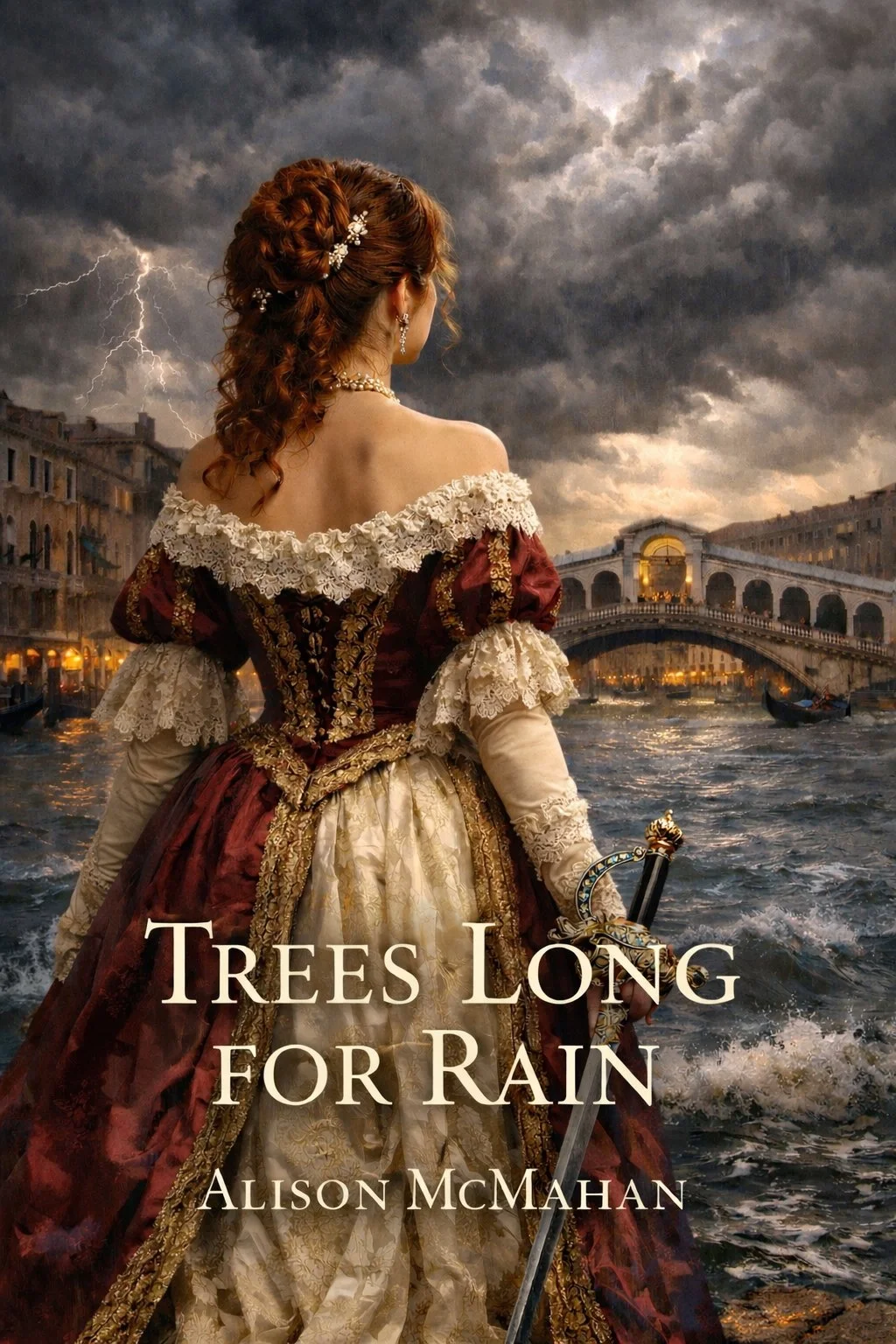
It’s here!
The REvised edition of my first novel
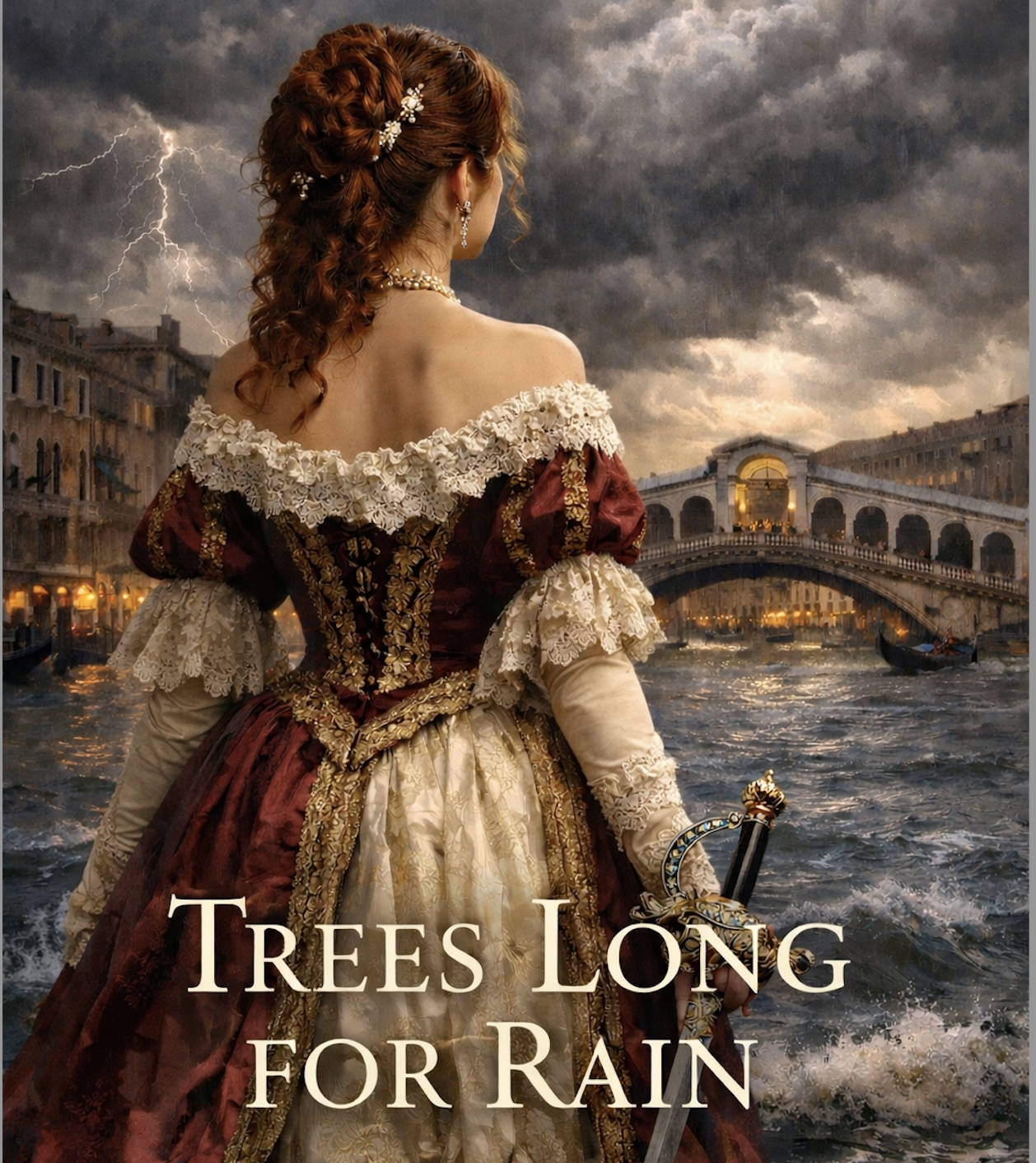
Trees Long For Rain
Venice, 1643. Isabella wants to sing in Monteverdi’s choir, but only boys (and castrati) can do that. Her singing teacher, Margherita, introduces her to a new wonder: opera! But then Isabella finds Margherita murdered. And now the killer is after Margherita’s son, Rafaele.
Isabella and Rafaele have to find Margherita’s killer before Rafaele is condemned for a murder he didn’t commit, though Isabella fears that the truth will tear her apart from the man she loves.
REview:
The Night we became strangers
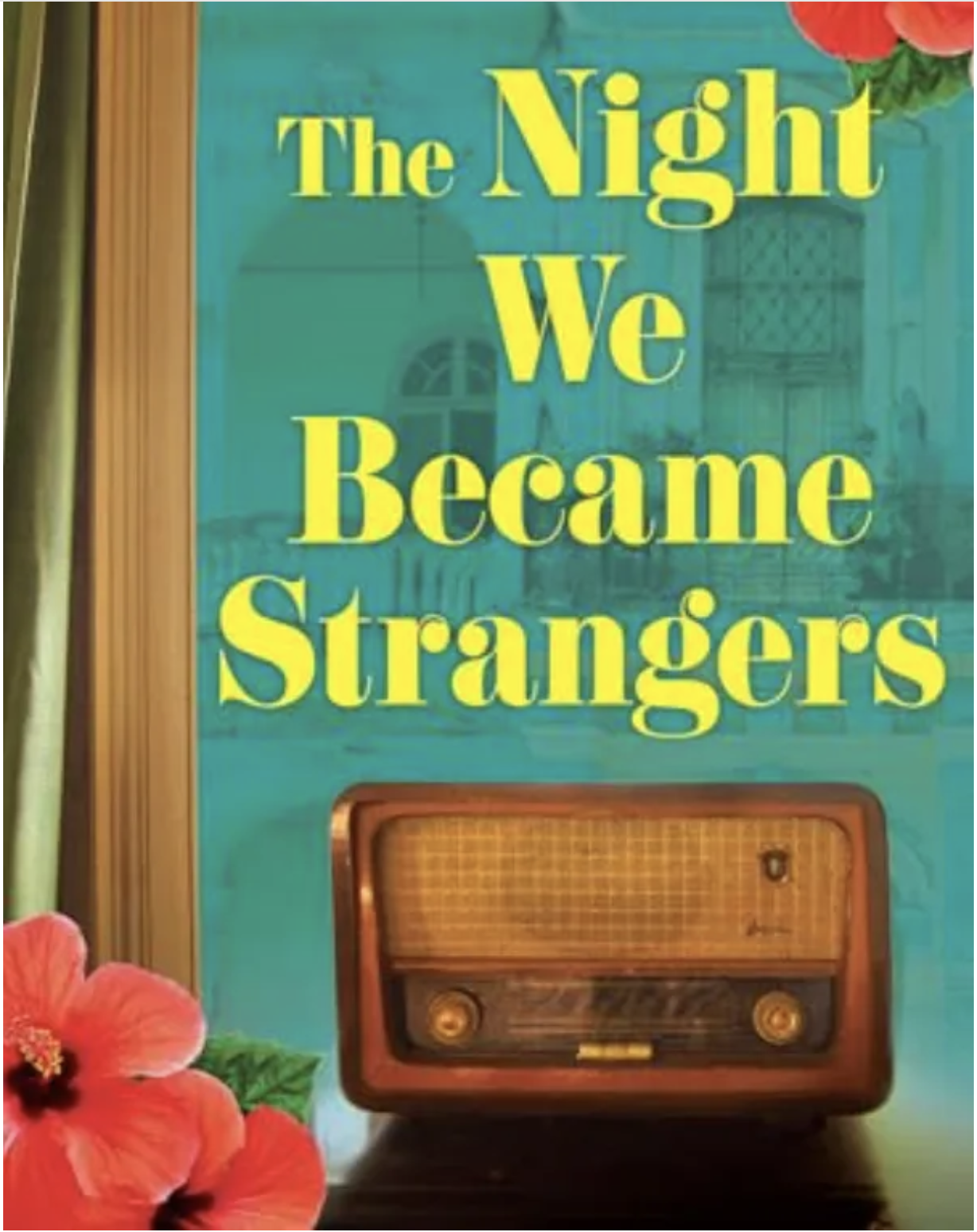
Written by Lorena Hughes
Review by Alison McMahan
This is a complexly plotted historical novel, a fictional story that swirls around one historical event: the live 1949 radio broadcast of War of the Worlds in Spanish in Quito, Ecuador. Orson Welles had broadcast it in the US in 1938, causing a widespread panic by people who really believed the Martians were invading. The broadcast in Quito was scripted in a “breaking news” format, with real politicians playing themselves as they gave “breaking news updates” to an increasingly panicked populace. Some set fire to the radio station, leading to the deaths of fifteen people inside.
The characters in the novel include a journalist and radio actress who died that night under confusing circumstances. Years later, the actress’s daughter, Valeria, the main character in a strong group of ensemble characters, returns from boarding school and decides to find out what really happened to her parents (her father disappeared after that fatal night) while she also tries to establish herself as a photojournalist.
You can read the full review at the Historical Novel Review website, here:
REview:
The Phoenix Pencil Company

Written by Allison King
Review by Alison McMahan
In WWII Shanghai, women of a certain family can absorb messages from the pencils that wrote them. They stab the pencils into their wrists and pour out life energy with the liquified pencil hearts. The Japanese invaders force the women to spy; after the war, so do the Communists and the Nationalists dueling for China’s soul. Yun and her adored cousin Meng lock down for years in the pencil production company, co-writing a fantasy story to stay human.
Yun finds a way out, to California, still indentured. Political complications, cowardice, and shame keep her from helping Meng. The historical background is sketched too lightly. Still, Yun’s section is fascinating.
REview:
TROUBLE IS MY BUSINESS:
The Graphic NOvel
“Trouble is my Business” (1939) was Raymond Chandler’s 21st mystery story. Chandler first wrote stories about knights of derring-do. He served in WWI, then returned to the US to work for an oil company. Let go during the Great Depression, he started writing pulp detective fiction.
Reading Chandler ninety years later is challenging. His poetically hard-boiled slang is so strange to us that the re-release of his first novel, The Big Sleep, has footnotes. In this graphic novel adaptation, Arvind David and his gifted artists make it easy: you see “shill” when Harriet Huntress uses her wiles to keep a man at the gambling table, and a “pretty hip draw” when George the chauffeur executes an attacking thug with a balletic arm motion.


Article:
The Lost Writing Partner: The case of Charles & Caroline Todd

WRITTEN FOR HISTORICAL NOVEL REVIEW
What is it like for a writer to lose their writing partner after many years and books together? How does the survivor navigate the financial and legal aspects of a long-standing partnership? What happens to the work when the writing partnership ends?